

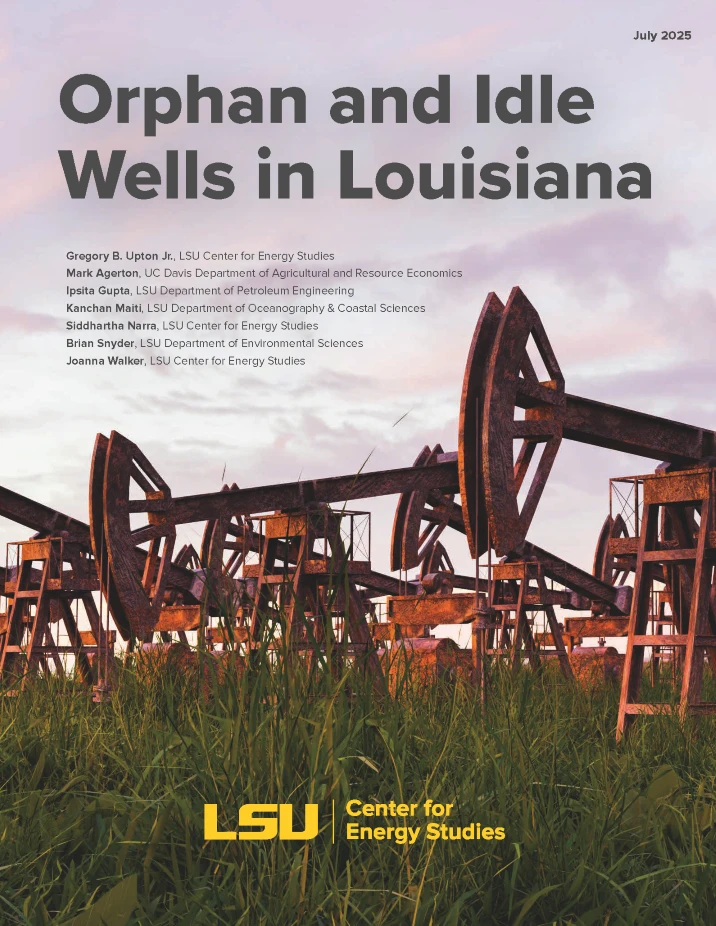
Gregory B. Upton Jr., LSU Center for Energy Studies; Mark Agerton, UC Davis Department of Agricultural and Resource Economics; Ipsita Gupta, LSU Department of Petroleum Engineering; Kanchan Maiti, LSU Department of Oceanography & Coastal Sciences; Siddhartha Narra, LSU Center for Energy Studies; Brian Snyder, LSU Department of Environmental Sciences; and Joanna Walker, LSU Center for Energy Studies, have co-authored a report titled "Orphan and Idle Wells in Louisiana," published in July 2025.
Researchers at LSU were commissioned by the Louisiana Department of Energy and Natural Resources (DENR) to evaluate the costs of plugging orphan and idle oil and gas wells across the state and to estimate associated methane emissions. The study provides an in-depth look at the Louisiana Oilfield Site Restoration (OSR) program, which was established in 1993 to address environmental concerns related to abandoned wells.
The report highlights the current landscape of well status in Louisiana, where out of more than 224,000 drilled wells, about 19,500 are classified as idle and nearly 4,900 as orphaned as of March 2025. Although orphan wells represent only about 4% of all wells drilled, the number has been increasing in recent years, due in part to new wells becoming orphaned before plugging.
Augmented by federal funding from the Infrastructure Investment and Jobs Act (IIJA), which allocated $4.7 billion nationally for orphan well plugging and remediation, Louisiana has received an initial grant of $25 million and anticipates an additional $156 million over the coming years. These funds aim to reduce methane emissions—a potent greenhouse gas—from leaking wells.
Key findings from the report include:
- The backlog of orphan wells is outpacing plugging activity. Many recently drilled wells have already been added to the orphan list, suggesting the issue extends beyond legacy wells.
- The projected increase in OSR fees starting in July 2025 is expected to raise additional funding by about 18%, bolstering plugging efforts.
The estimated cost to plug all orphan and idle wells in Oklahoma and northern Louisiana districts is approximately $860 million—considerably exceeding available federal funding so far. - Methane emissions vary widely among wells, with a small fraction contributing disproportionately. Detection methods showed methane presence in nearly all wells tested with sensitive equipment.
- The initial $25 million investment in Louisiana supported approximately 120 jobs and generated $16.4 million in economic output through well decommissioning since early 2023.
- Ongoing federal funding is projected to sustain over 160 jobs annually, along with millions in wages and economic value.
Methane abatement from plugging northern Louisiana wells is estimated at up to 1,170 metric tons per year, equating to significant energy value that would otherwise be lost. - Targeted plugging based on measured methane emissions could maximize environmental benefit per dollar spent by prioritizing high-emitting wells, though this may reduce the total number of wells plugged given budget limits.
This study informs state policymakers and stakeholders about the scale and economics of addressing orphan well liabilities in Louisiana and underscores the importance of strategic methane mitigation. The findings align with broader efforts to reduce greenhouse gas emissions while supporting economic activity in oil and gas field restoration.

