
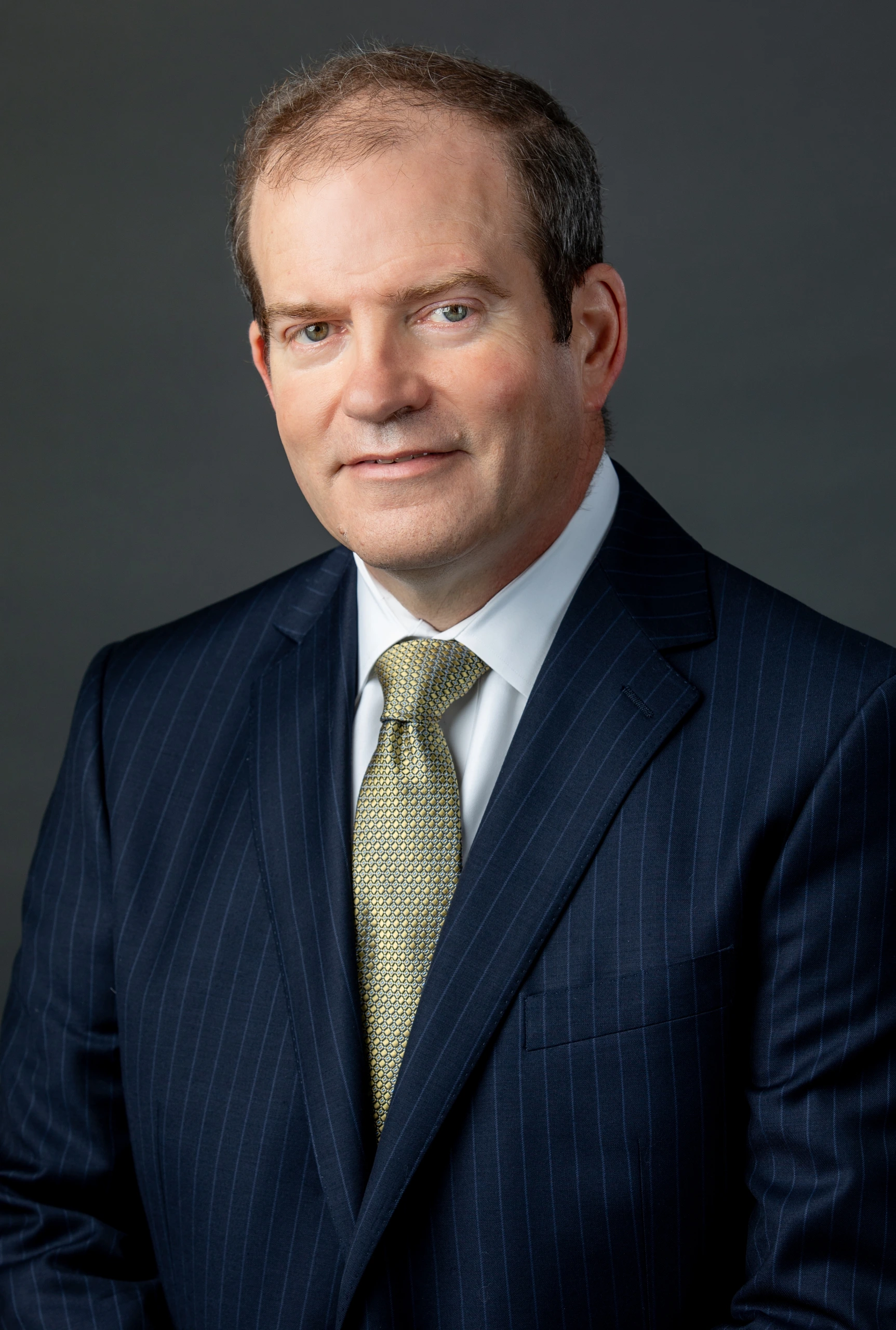
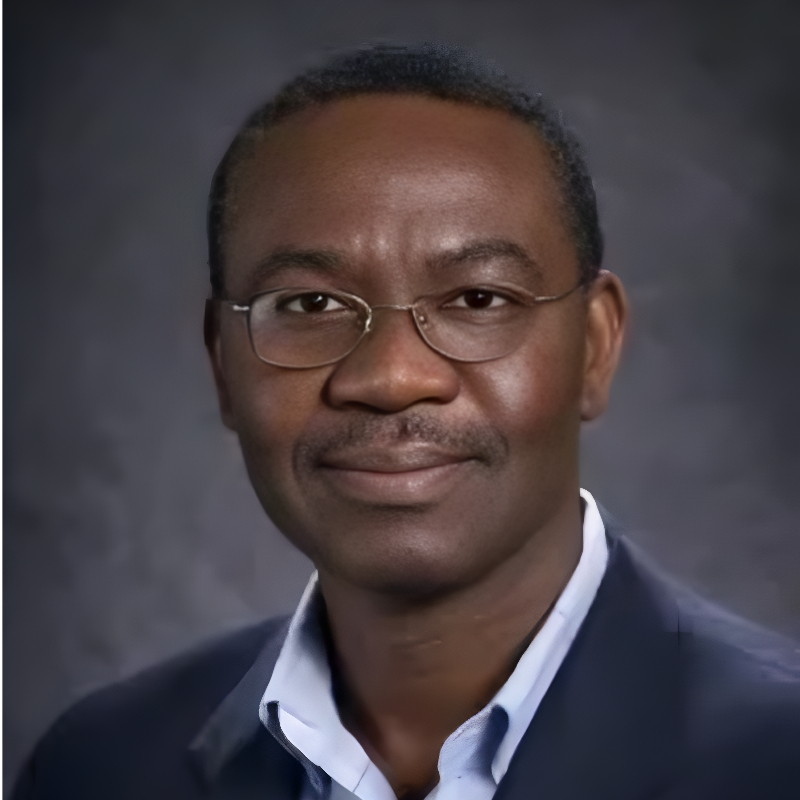
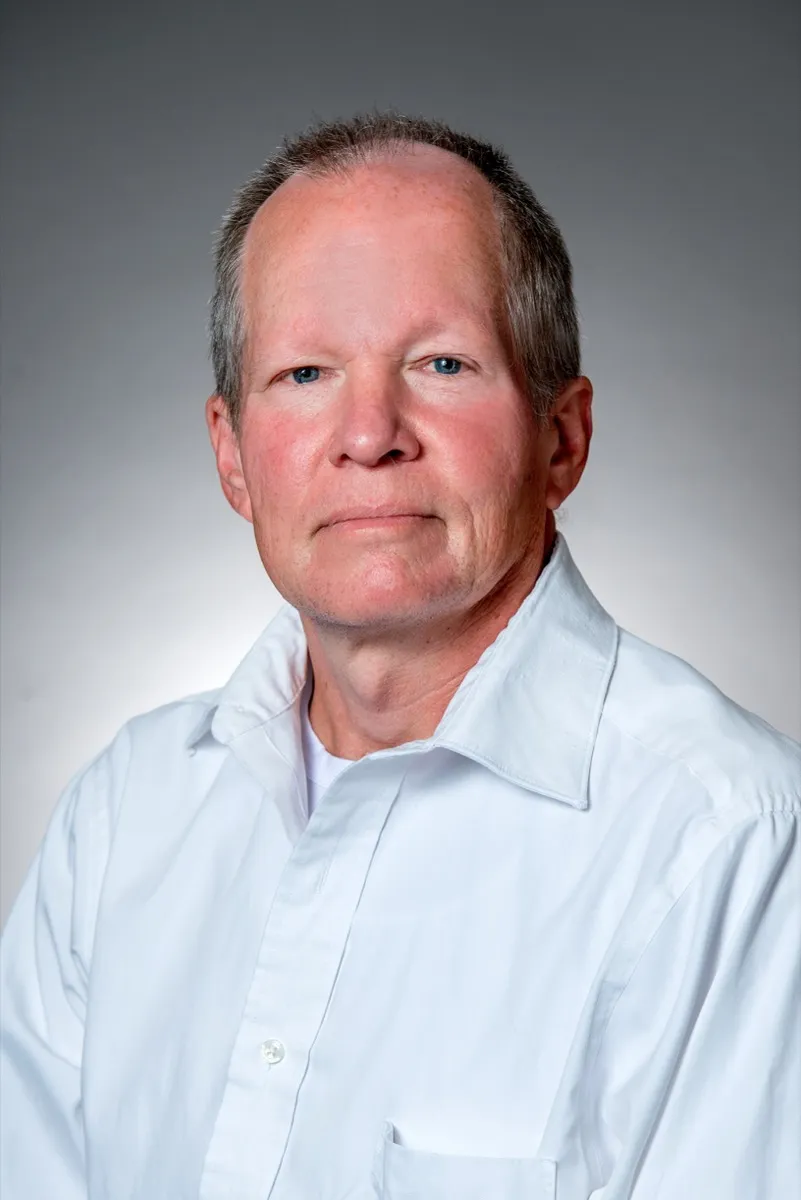


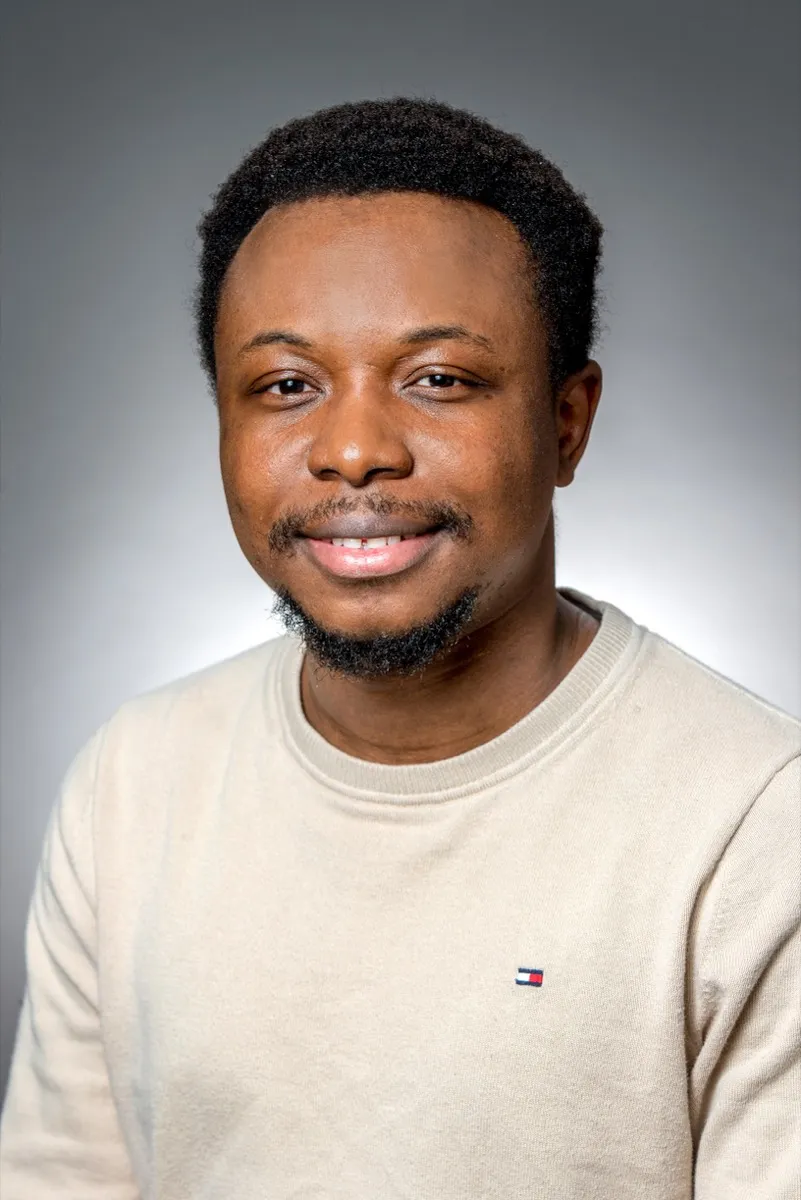
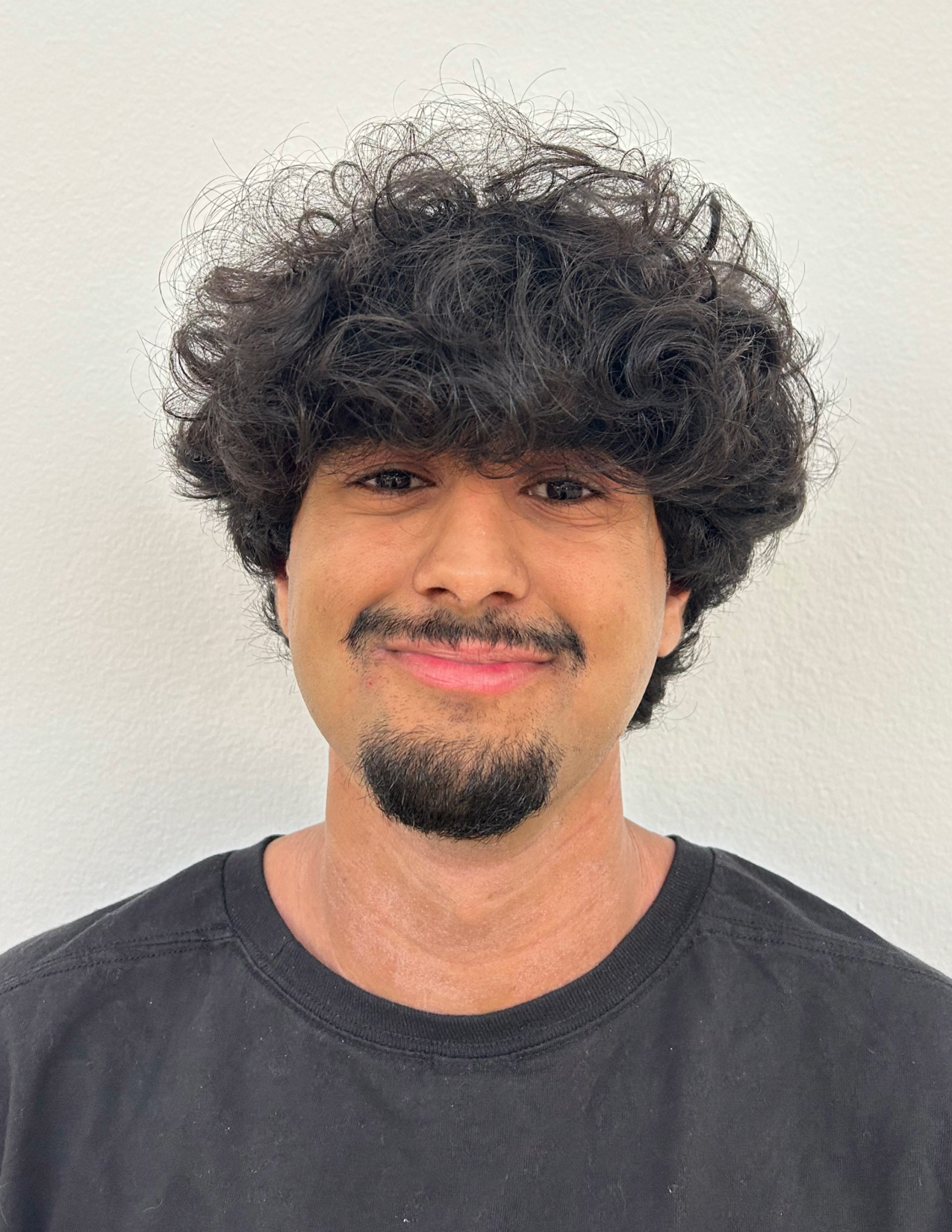
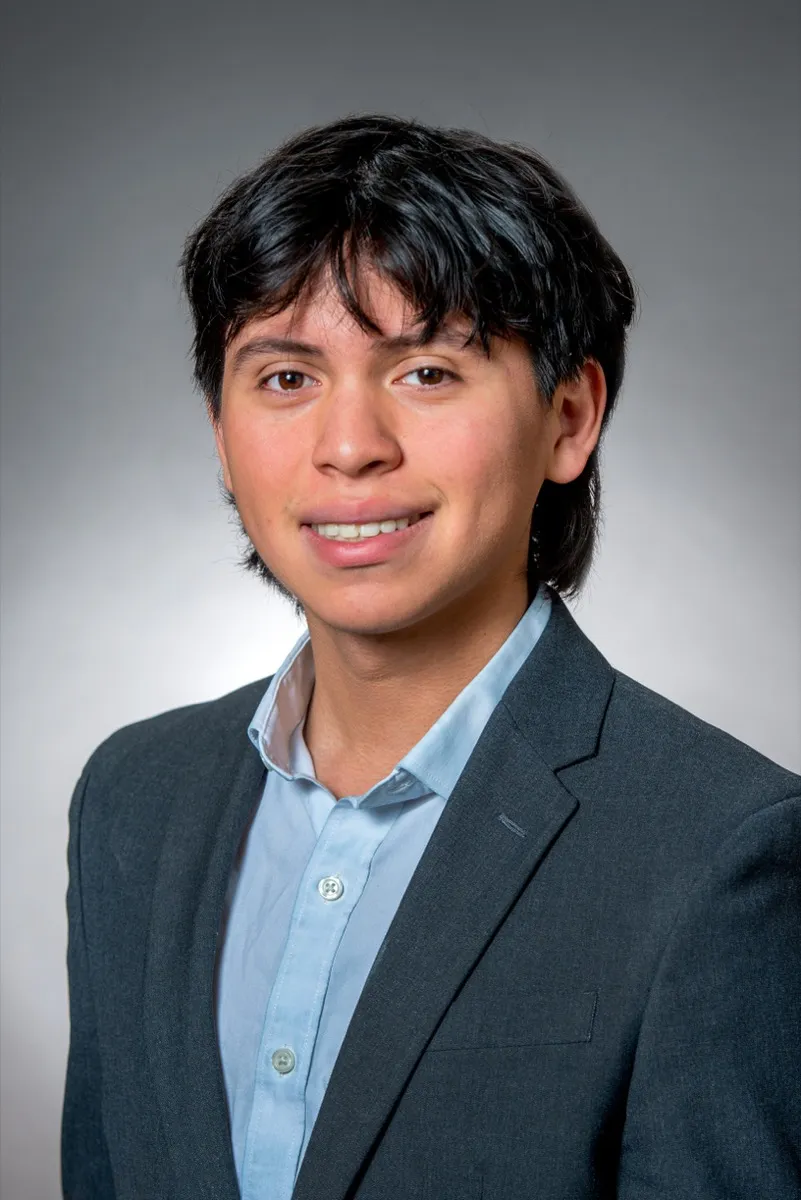
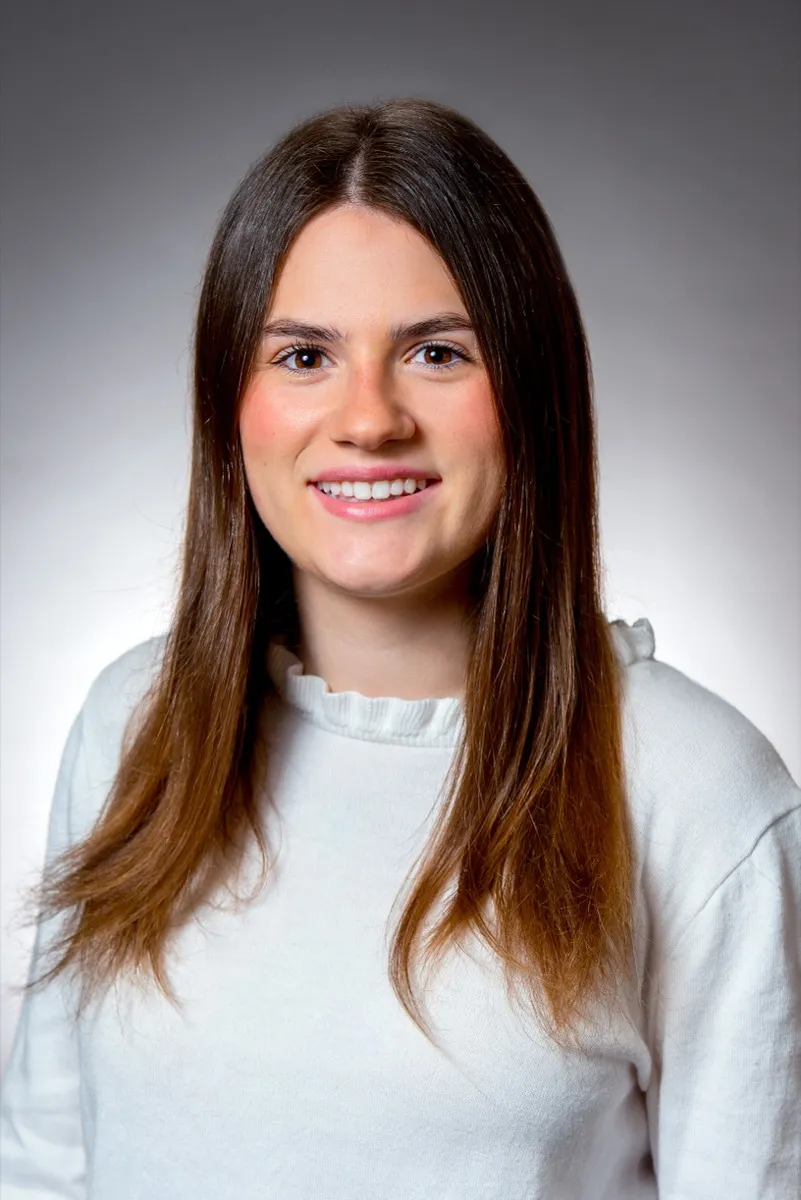


Amanda Dial is the energy information manager at the LSU Energy Institute. As a librarian with over 15 years of experience in digital information organization and management, her current work focuses on providing access to online and physical energy information resources. She also works with the Louisiana Department of Conservation and Energy to support the state's energy education and outreach program. Amanda holds an MLIS from Louisiana State University and a B.S. in Chemistry from Murray State University.

Ashma Pandey is a research associate at the Center for Energy Studies, Louisiana State University. Her work centers on data analysis with a focus on time series modeling. She brings expertise in database management, data cleaning, statistical analysis, and data visualization to support a range of energy-focused research projects.
Ashma holds a dual master's degree in data science and economics from South Dakota State University (2024). During her graduate studies, she collaborated with the USDA Economic Research Service on research examining WIC infant formula rebates and bidding processes, contributing to evidence-based policy insights.

Carole Moore serves as the Executive Assistant to the Director of the LSU Energy Institute. Before joining the Institute, she was the Executive Assistant to the director of the LSU Institute for Energy Innovation.
Prior to her transition to LSU in January 2024, Ms. Moore spent more than a decade as the Administrative Manager for Theatre Baton Rouge, where she oversaw operations, administration, and community engagement. Earlier in her career, she worked in the hospitality industry for over ten years, holding leadership roles including Sales Manager, Front Desk Manager, and Assistant General Manager.
Ms. Moore brings extensive experience in administration, human resources, and event management to her role at the Energy Institute, along with a proven commitment to organizational excellence and team collaboration.

Chris McLindon has long served as director of energy education and outreach for the LSU Center for Energy Studies. He oversees the development and implementation of educational programs aimed at preparing the next generation of energy leaders. He also engages with key stakeholders, including policymakers, industry professionals, and the general public to promote awareness and understanding of key energy issues.
Mr. McLindon worked for four decades as a geologist in the upstream oil and gas industry and more recently as a geologist in the carbon capture and storage industry. The latter experience included the exploration and development of new sites for CO2 sequestration in Louisiana and Texas, the development of geological models for CO2 injection simulation, and geological site characterization for Class VI permit applications for CCS projects in Louisiana and Texas.
Mr. McLindon holds a B.S. in Geology from LSU. He is a member and past president of the New Orleans Geological Society, and is a member of the Geological Society of America and the Society of Independent Professional Earth Scientists.

CES Research Fellow Andrew Owens retired from Entergy at the end of 2023 as Director, Regulatory Research & Strategy. He joined the company in 1998 and spent 25+ years in several roles, including a stint in the deregulated retail electricity market in Texas. Most of his Entergy career was focused on regulatory and policy matters. From 2015-2023, he led a team responsible for providing support and strategy to Entergy's five public utilities on various regulatory matters and policy issues related to ratemaking and emerging technologies, including smart grid, energy efficiency and demand response, distributed energy resources (DERs), renewables, electric vehicles and charging infrastructure, and energy storage.
From 1991 to 1996, Andrew worked in environmental consulting and focused on federal and state air pollution issues, policies, modeling simulations, and permitting. He earned a B.S. in chemical engineering with distinction from Iowa State in 1991 and received an M.S. in management (M.B.A.) from Georgia Tech in 1998. He is a registered professional engineer in Georgia and a licensed CPA in Louisiana.

Derek Berning assists with the Center's long- and short-term projects on the energy economy of the Gulf Coast, including the annual Gulf Coast Energy Outlook and an infrastructure tracking database. He is responsible for collecting, cleaning, and visualizing energy data in Stata, using both established and novel sources. Additionally, Derek helps update the Center's papers and publications prior to presentation to its diverse audiences and gathers information for stakeholders upon request.
Derek began working at the Center in May 2023, shortly after having earned a B.A. from the University of Portland with a major in economics and a minor in political science. His undergraduate capstone focused on the effects of the temporarily expanded pandemic-era child tax credit.

Dr. Akinbobola Akintomide's research involves the integration of geophysical data such as 3D seismic data and well logs, geology data, and biostratigraphy data to understand the structural deformation in salt basins such as the Gulf of Mexico. He researches the formation of salt basins, salt-fault interaction, fault interactions, and their effect on fault-seal analysis. He also evaluates reservoirs for hydrocarbon potentials and CO2 storage.
Dr. Akintomide uses field mapping, geophysical surveys, and remote sensing to interpret fluvial deposits and assess the relationship between subsurface geology and geomorphic features such as coastal subsidence.

Anurag Mandalika is assistant professor of research at the Center for Energy Studies. His research interests include biomass and bioenergy, biofuels, waste reduction and valorization, emissions measurement, and carbon dioxide removal. During his research career, Anurag has studied the production of the platform chemicals furfural and furfuryl alcohol in high yield from a variety of biomass sources using novel, green chemistry principles, evaluated the application of membranes for separations in biomass processing and conversion, and studied the removal of arsenic from water using adsorbents prepared from waste biomass sources. Prior to starting his role at CES, Anurag was an assistant professor with the LSU AgCenter, working on challenges experienced by the sugarcane industry in Louisiana, and exploring digital agriculture and automation, and the ethics associated with their implementation in agriculture. As a postdoctoral researcher at UW-Madison, he investigated emissions generated from manure processing and storage to reduce deaths from suspected hydrogen sulfide poisoning in the dairy industry. As a research associate with the U.S. Forest Service, Anurag studied the potential for bioenergy of forest residues and woody biomass using a pilot-scale gasifier and the production of films and foams from lignocellulosic biomass sources. Anurag holds a B.S. in biosystems engineering from Clemson University with a minor in environmental engineering and M.S. and Ph.D. degrees in biological systems engineering with a minor in chemistry from the University of Wisconsin-Madison. He is a member of the American Society for Agricultural and Biological Engineers (ASABE) and the United States Association for Energy Economics (USAEE).

Dr. Clare Falcon is a professor of research of the Louisiana Geological Survey, where she served as Director from 2021-2025. She brings more than 25 years of geoscience experience, primarily from industry, with expertise in Gulf of Mexico exploration, sedimentology, and geoscience leadership. During her tenure as Director, she led a $1 million state-funded carbon sequestration study critical to Louisiana's economy and environment.
Dr. Falcon previously held senior roles at BHP, Eni, Amoco, Schlumberger, and Statoil. She earned her Ph.D. from the University of Leeds and her bachelor's degree in geology from the University of Liverpool. She is the first woman to serve as Louisiana's State Geologist and led LGS in advancing science-based stewardship of Louisiana's natural, energy, and environmental resources.
As part of the LSU Energy Institute, Dr. Falcon and LGS continue to share their expertise in subsurface, geological, and geophysical analysis.

David E. Dismukes served as the executive director and professor at the Center for Energy Studies, Louisiana State University from 2014 through 2022. He was also a professor in the Department of Environmental Sciences in the LSU College of the Coast & Environment (CCE).
Post-retirement from LSU, Dr. Dismukes has continued to work in consulting. His research interests are related to the analysis of economic, statistical, and public policy issues in energy and regulated industries. He has worked in consulting, academia, and government service and given more than 200 energy-related presentations to civic, professional, and trade organizations. His opinions on energy industry trends and issues have been quoted in the Wall Street Journal, the Washington Post, the New York Times, the Christian Science Monitor, the Los Angeles Times, and USA Today, as well as a host of other regional and local newspapers and trade newsletters.
During his time on the CES faculty, Dr. Dismukes led a number of the Center's research efforts on topics associated with many aspects of the energy industry including offshore and onshore oil and gas exploration and production (E&P) activities; the restructuring of natural gas and electric power markets; market structure issues in various energy industries; economic and policy issues related to renewable energy generation and market design, the regulation and performance of electric and natural gas utilities, and the economic impacts of energy industry infrastructure development along the Gulf Coast.
Dr. Dismukes prepared more than 120 publications including books, book chapters, articles, reports, manuscripts, and academic society conference papers. His academic and trade publications on energy and regulated industries have appeared in such journals as Resource and Energy Economics, Southern Economic Journal, Utilities Policy, Energy Journal, Studies in Economic and Finance, IEEE Transactions on Power Systems, Natural Resources Forum, Journal of Legal, Ethical, and Regulatory Issues, Public Resources Law Digest, Electricity Journal, Oil, Gas, and Energy Quarterly, Natural Gas Journal, Natural Gas Outlook, Public Utilities Fortnightly, Financial Times-Energy, and the American Oil and Gas Reporter.
His conference papers have been published in proceedings sponsored by the Society of Mechanical Engineers (SME), the Society of Petroleum Engineers (SPE), the Institute for Electrical and Electronic Engineers (IEEE), the International Energy Foundation (IEF), the International Association of Energy Economics (IAEE), the International Association of Science and Technology for Development (IASTED), the Southwest Academy of Management, and the Academy of Legal, Ethical, and Regulatory Issues. He has authored a number of book chapters on energy and regulatory issues and is the co-author of a textbook on electric power restructuring and competition for CRC Press titled Power Systems Operations and Electricity Markets.
Dr. Dismukes received his M.S. and Ph.D. in economics from the Florida State University. He is a member of numerous professional associations including the American Economic Association, American Statistical Association, Econometric Society, Energy Bar Association (non-attorney member), National Association for Business Economics, Southern Economic Association, Western Economic Association, the United States Association of Energy Economics and the International Association of Energy Economics.
He also served, in addition to his CES and CCE appointments, as an adjunct professor in the Department of Economics in the E.J. Ourso College of Business at LSU and was a full member of the Graduate Research Faculty at LSU.

Donald A. Goddard, who retired from LSU in July 2009, was an associate professor at the Center for Energy Studies. He served first as coordinator and later as director of the Central Gulf Region Petroleum Technology Transfer Council (PTTC). In this capacity, with the help of Louisiana's Producer Advisory Board (PAG), Professor Goddard was responsible for identifying and transferring upstream technologies to Louisiana independent producers. His petroleum research activities included integrated field studies of mature producing areas and regional production of Gulf Coast sedimentary basins.
As assistant professor-research at LSU's Basin Research Institute (1991-1996), his research involved the characterization of Tertiary age reservoirs in Central Louisiana, and he participated in projects in basin analysis of the Gulf Coast Region. Professor Goddard began his career in 1965 with Gulf Oil Co. (Mene Grande) in Eastern Venezuela, and has more than twenty-five years of petroleum industry experience, both in exploration geophysics and production geology.
He has a B.S. degree in geology from Florida State University, M.Sc. and Ph.D. degrees in marine geology and geophysics from the University of London (UCL), and a geological engineering degree from the Universidad Central de Venezuela. He is a member of the American Association of Petroleum Geologists, the Baton Rouge Geological Society, and the Venezuelan Geological Society.

Dr. Greg Upton serves as executive director & associate research professor at the LSU Center for Energy Studies.
Dr. Upton's research interests span energy and environmental economics. He has contributed to over 40 publications and presented research to more than 200 industry, government, and academic audiences, including testifying in committees of both chambers of the Louisiana Legislature and a subcommittee of the U.S. House of Representatives. He is regularly interviewed on live talk radio and other news outlets and has been quoted or cited over 250 times in local and national media including the Wall Street Journal, New York Times, USA Today, and NPR.
Dr. Upton is the president-elect for the United States Association for Energy Economics (USAEE), a member of the University Advisory Board to the Center for Legislative Energy & Environmental Research (CLEER) and an appointee to the National Petroleum Council (NPC). He is a legislatively appointed member of the Clean Hydrogen Task Force created by House Concurrent Resolution 64 of the 2024 Regular Session of the Louisiana Legislature as well as the Task Force on Local Impacts of Carbon Capture and Sequestration created by Senate Resolution 179 of the 2023 Regular Special Session of the Louisiana Legislature. He is part of the Baton Rouge Business Report Forty Under 40 class of 2024 and an LSU alumnus, receiving his Ph.D. in Economics from LSU in 2014.

Dr. Jack Koban is senior director of energy industry engagement at the LSU Foundation, where he leads efforts to strengthen collaboration between LSU and the energy industry. Since joining the Foundation in 2025, Dr. Koban has focused on developing research partnerships, technology transfer initiatives, and investment opportunities that align with Louisiana's energy transition goals. A licensed professional engineer and geologist with more than 20 years of experience, he has worked extensively in geotechnical engineering, environmental consulting, and project management across the Gulf Coast. Dr. Koban is active in several professional organizations, serving on the boards of the American Society of Civil Engineers, the Coast Builders Coalition, and the American Shore and Beach Preservation Association. Through his leadership, he continues to advance LSU's role as a hub for energy innovation and applied research.

Joanna Walker is an assistant professor of research at the Center for Energy Studies at Louisiana State University. Her research focuses on carbon capture, utilization, and sequestration (CCUS), energy transition, storage complex characterization, and environmental justice. At LSU, her work includes research on methane leakage from orphaned wells, the economic impacts of carbon sequestration on Louisiana landowners, geothermal workforce and subsurface considerations, and the geologic feasibility of salt-dome hydrogen storage.
During her Ph.D. research, Joanna developed a method for fracture identification using excess anisotropy in horizontal wells in the Permian Basin and proposed alternative approaches for delineating Areas of Review for carbon sequestration projects.
Joanna is a professional geologist with experience spanning the upstream industry, academia, and regulatory environments. She has supported Class VI carbon sequestration permitting and technical reviews across multiple states and previously served as a regulatory geologist with the State of Louisiana, where she helped establish geologic and engineering review criteria for Class VI injection well permits.
She holds a B.S. in geology from Tarleton State University, an M.S. in geology from the University of Texas Permian Basin, and a Ph.D. in geology from the University of Houston.

Dr. Margaret Reams is the Joseph D. Martinez Professor of Environmental Sciences within LSU's College of the Coast and Environment and serves as the associate director for community engagement at the LSU Institute for Energy Innovation.
Dr. Reams is an expert in community engagement theory and methods as they relate to environmental policy development and implementation. A political scientist with 30 years of experience, she has taught graduate courses in environmental policy, program evaluation, environmental planning, and conflict resolution. Her research focuses on working with Louisiana agencies and communities to enhance resilience to environmental disturbances. She was also a co-principal investigator on the $12.5 million grant from the National Institute of Environmental Health Sciences that established the LSU Superfund Research Center.
Dr. Reams has led focus groups and community surveys on environmental and land-use policy preferences, attitudes, and risk perceptions concerning environmental hazards, remediation strategies, and technologies. She received the LSU Foundation Distinguished Faculty Teaching Award for her exceptional graduate-level teaching and mentoring, having supervised over ninety M.S. theses on various environmental policy and public attitude issues. Dr. Reams holds an undergraduate degree from Huntingdon College and an M.A. and Ph.D. in political science from the University of Georgia.

Dr. Mark Kaiser is a professor of research at the Center for Energy Studies and Marathon Oil Professor of Energy Policy. His primary research interest covers the oil, gas, and refining industry and is related to cost assessment, fiscal system analysis, economic and infrastructure modeling, and valuation studies. His work appears across a broad spectrum of energy, engineering, mathematics, scientific, and policy journals.
Dr. Kaiser received his doctorate in Industrial Engineering and Operations Research from Purdue University and has consulted and served as technical advisor to corporations and government agencies.

Marty joined the Louisiana Geological Survey as an assistant professor of research in January 2007. He was previously at the LSU Department of Geology & Geophysics as Instructor and Field Camp Director. He earned a B.S. in Geophysics at the University of Oklahoma in 1982, an M.S. in Geology at the Arizona State University in 1986, and a Ph.D. in Mathematical Sciences & Geology at the University of Texas at Arlington in 1996. He has taught courses in Physical Geology, Historical Geology, Mineralogy, Igneous and Metamorphic Petrology, Volcanology, and Field Geology (sedimentary, igneous, metamorphic, and structural geology).
His early research topics at LGS included stratigraphy and structural geology of the North Louisiana Salt Basin structural province in northwestern Louisiana, mapping and petrographic contributions to the USGS STATEMAP initiative to produce 100k scale geologic maps of Louisiana, sampling and analysis of ground water chemistry related to the Haynesville Play, northwest Louisiana, and measurement and analysis of stream discharge at over 50 gaging stations across the State.
Marty currently leads LGS' mission in geologic mapping of the state of Louisiana at 1:24,000 scale, funded by the National Cooperative Geologic Mapping Program (NCGMP) and administered by the US Geological Survey. Geologic mapping at this scale has recently focused on quadrangles in the Florida parishes of southeast Louisiana due to its rapid residential and economic growth. The region produces an abundance of construction raw materials: clay, sand, and gravel, from sediment that was deposited at near sea-level during glacial and inter-glacial periods over the last 130,000 years. Mapping at this scale also resolves traces of the Baton Rouge – Tepetate fault system, a continental scale system with normal displacement separating the greater Gulf of Mexico structural basin from the North American craton.
In addition to geologic mapping, Horn develops and applies field geophysics methods of magnetometry and electrical resistivity to identify near-subsurface geologic features, such as fault zones, sediment layering, and ground water topology & chemistry. These methods are also applied to non-natural features: buried waste, pipelines, historic and pre-historic archaeological ruins, and cemetery and criminal graves, in collaboration with archaeologists, environmental engineers, and law enforcement.

Professor Omowumi (Wumi) Iledare retired January 3, 2014, after 21 years of service to the Center for Energy Studies. He was professor of petroleum economics and policy research and the director of the Energy Information and Data Division of CES. He was also an adjunct professor of petroleum economics at the Craft & Hawkins Department of Petroleum Engineering at LSU and the University of Ibadan. Professor Iledare was also a visiting professor of petroleum economics at the Institute of Petroleum Studies (IPS) in the University of Port Harcourt, Nigeria, and to the African University of Science and Technology (AUST), Nigeria.
Since retiring from CES, Professor Iledare has served as director of the Emerald Energy Institute for Petroleum, Energy Economics, Policy and Strategic Studies at the University of Port Harcourt in Rivers State, Nigeria.
Professor Iledare holds a B.Sc. degree in petroleum engineering with honors from University of Ibadan, Nigeria, an M.S. in energy resources with emphasis on oil and gas economics from the University of Pittsburgh's School of Engineering, and a Ph.D. in mineral economics with emphasis on oil and gas economics from West Virginia University.
Prior to joining the faculty at the LSU Center for Energy Studies, Professor Iledare worked as a petroleum/reservoir engineer for Shell Petroleum Development Company (SPDC) in Nigeria and as a reservoir/production engineer trainee for Mobil Producing Nigeria (MPN). He also worked briefly as an energy specialist with the California Energy Commission, Sacramento. Professor Iledare is a Senior Fellow of the United States Association for Energy Economics (USAEE) and the 2008 USAEE President. Professor Iledare is an outstanding member of the Society of Petroleum Engineers (SPE).
Over the years, Professor Iledare has specialized in global oil and gas industry structure, conduct, and performance analysis; oil and gas exploration and production economics and policy research; the environmental effects of oil and gas exploration and production; taxation and regulation of the oil and gas industry; and refinery and petrochemical economics and policy. He has published several research papers on petroleum economics in conference proceedings of the SPE and USAEE/IAEE and in several trade and academic journals. He has served as a facilitator for workshops on petroleum economics and risk analysis at SPE Conferences organized by SPE Nigeria Council. He has also conducted petroleum economics and policy seminars and workshops organized by international oil and gas companies, national oil and gas companies, and government ministries and agencies for industry professionals, federal legislators, executive officers and professional staff and managers. Recent projects include an empirical analysis of worldwide deepwater prospects with emphasis on the U.S. Gulf of Mexico OCS Region.
Professor Iledare has been a recipient of many awards in recognition of his distinctive services and professional competence in petroleum economics, including the 2008 SPE Regional Award for professional excellence and distinction in management and information; 2007 USAEE Senior Fellow; 2007 SPE Nigeria Council Best Paper Presentation Award; 2004 SPE Nigeria Council recognition award; 2003 USAEE Service Award; President, Association of Nigerian Petroleum Professionals Abroad (ANPPA), 2002-2004; Fifteen-year Service Award, Louisiana State University, 2007; SPE Nigeria Council Distinguished Service Award 2002.

Siddhartha Narra is a research associate at the Center for Energy Studies and leads the Energy Information and Data core area at the LSU Energy Institute. His work involves developing and maintaining energy databases and applications that provide consistent, transparent, and replicable energy data for Louisiana. His other responsibilities include managing, processing, and analyzing oil and gas activity data for the Gulf of Mexico and the State of Louisiana using quantitative modeling techniques, exploratory and descriptive statistical methods, geographic information systems, and related data systems that inform policymakers, industry, and the public.
Dr. Narra’s research has included modeling service vessel operations in the U.S. Gulf of Mexico, forecasting offshore decommissioning and pipeline activity, and conducting scenario-based analyses of oil and gas field development and economic limits in the Gulf. He has also studied the financial liabilities and environmental implications of unplugged offshore wells and has contributed to Louisiana-focused analysis of orphan and idle wells, including cost estimation and methane emissions assessment. His broader portfolio also encompasses studies of coastal energy infrastructure vulnerability, sea-level rise and inundation risks, and long-term development and decommissioning trends in the Outer Continental Shelf.
Dr. Narra received his M.S. (2002) and Ph.D. (2007) in natural resources and environmental sciences from the University of Illinois at Urbana–Champaign.

Dr. Wei-Hsung Wang is a professor at the Center for Energy Studies, director of LSU's Radiation Safety Office, an adjunct professor in the Department of Physics & Astronomy and the Department of Environmental Sciences, and a clinical professor of radiology at LSU Health New Orleans. He teaches radiation protection and exposure evaluation, remediation, and nuclear safety and received his Ph.D. in health physics from Purdue University.
His research centers on the development of workable solutions to practical radiological protection, radiation detection, and environmental impact issues. Most of his work has emphasized operational radiation safety, radiation detection instrumentation, air monitoring methodology, radioactive waste management, gamma-ray spectroscopy, radiation dosimetry, environmental radiation, and radiological emergency response planning and preparedness. He holds a U.S. patent on a real-time video radiation exposure monitoring system.
Dr. Wang is certified by the American Board of Health Physics (ABHP), the Board of Certified Safety Professionals, and the Board of Laser Safety and a charter member of the U.S. Environmental Protection Agency (EPA) Science Advisory Board and its Radiation Advisory Committee.

Greg Albrecht is a research fellow at the Center for Energy Studies. He comes to the Center after having been with the Louisiana Legislative Fiscal Office from October 1985 until January 2022, serving as chief economist since 1991. As chief economist, Albrecht tracked the Louisiana economy and relevant tax issues to prepare state revenue forecasts and analyze tax legislation.
Albrecht is also an adjunct instructor in the LSU Department of Economics.
As research fellow at the Center, Albrecht assists in estimating the economic and governmental fiscal impacts associated with various energy investments in the state.

Michael Surman is responsible for all aspects of CES's computer networks and databases including software management, hardware and technical support, and local area network (LAN) maintenance and long-term planning. Mr. Surman maintains CES's network of personal computers, workstations, and servers consisting of Windows, UNIX, and Linux operating systems.
His other duties include the maintenance and co-development of the Center's Internet presence on the World Wide Web through its web pages and assisting the PTTC in defining computer-based technological developments for the oil and gas industry. He has created computer-based applications and databases for independent oil and gas operators in the Central Gulf Coast Region.
He has also taught computer classes for the LSU Short Courses and Conferences department and has been an invited speaker at several conferences and organizational meetings.
Mr. Surman holds a B.S. from St. Bonaventure University and an M.S. from the State University of New York (SUNY) at Fredonia.

Nikkolas Monceaux is a research project director at the Center for Energy Studies, Louisiana State University. His responsibilities include managing, processing, and analyzing data related to energy infrastructure in Louisiana and the Gulf Coast using economic theory and econometric techniques. His current projects include developing an energy infrastructure database and modeling and forecasting production and employment trends.
Prior to joining the Center for Energy Studies, Mr. Monceaux received his M.S. (2024) in Economics from Louisiana State University.

Keith B. Hall holds the Nesser Family Chair in Energy Law at Louisiana State University, where he serves as Director of the Mineral Law Institute and as Director of the John P. Laborde Energy Law Center. He also holds the Campanile Charities Professorship in Energy Law. He teaches Mineral Rights, International Petroleum Transactions, Civil Law Property, and Energy Law & Regulation.
Professor Hall is the co-author of three books on oil and gas law— (1) The Law of Oil and Gas (a national casebook), (2) International Petroleum Law and Transactions, and (3) Hydraulic Fracturing: A Guide to Environmental and Real Property Issues. He is a co-editor and chapter author of a fourth book on oil and gas law—The Regulation of Decommissioning, Abandonment and Reuse Initiatives in the Oil and Gas Industry, which examines decommissioning regulations around the world. In addition, he is the author of Louisiana Real Property Law and Practice.
Professor Hall’s shorter publications have focused on carbon capture and storage, oil and gas wastewater management, implied covenants in oil and gas leases, joint operating agreements, oil and gas pooling and unitization, induced seismicity, and legal issues relating to hydraulic fracturing. He also has worked on issues relating to the right to extract lithium from produced water or other brine.
In addition to teaching at LSU, Professor Hall has taught energy law classes as a visiting professor at Baku State University in Azerbaijan, as a visiting professor at the University of Pittsburgh, and as an adjunct professor at Loyola School of Law in New Orleans.
Professor Hall serves as Editor-in-Chief of the Institute for Energy Law’s “Oil & Gas E-Report.” He is active in the Energy & Mineral Law Foundation, the Foundation for Natural Resources and Energy Law (formerly known as the Rocky Mountain Mineral Law Foundation), and the Association of International Energy Negotiators.
Professor Hall has served as an expert for oil and gas disputes arising in Texas, New Mexico, Oklahoma, Louisiana, North Dakota, Pennsylvania, and West Virginia, as well as outside the U.S. He also has served as an arbitrator and drafted amicus briefs.
Before joining the LSU faculty in 2012, Professor Hall practiced law at a major firm in New Orleans for sixteen years, and before that he worked for eight years as a chemical engineer in the petrochemical industry. He graduated from Loyola Law School (New Orleans) in 1996 (J.D.) and from Louisiana State University in 1985 (B.S., Chem. Eng.).

Randy Dannenberg has more than 20 years of combined experience in accounting, higher education administration, finance, entertainment development, and production. Leveraging a unique blend of creative, analytical, and team leadership skills, he has made significant contributions to the educational and entertainment industries. In addition, he is a Certified Public Accountant with an M.F.A. from Florida State University in film and television production.

Tyler Gray currently serves as director of energy innovation at the LSU Energy Institute. Prior to this role, he served as Secretary of the State of Louisiana's Department of Energy and Natural Resources.
Before that, he held positions as Director of Corporate and Government Affairs for Placid Refining Company, LLC and President of the Louisiana Mid-Continent Oil & Gas Association. He also served as an attorney in the Department of Natural Resources, Office of Conservation and for the City of New Orleans.
He graduated with a B.A. in Economics from James Madison University in Virginia, received his J.D. from Loyola University in New Orleans, and M.B.A. with a specialization in economics from Louisiana State University. Mr. Gray is licensed to practice law in Louisiana and currently serves on several public and private boards and commissions.


Amanda Dial is the energy information manager at the LSU Energy Institute. As a librarian with over 15 years of experience in digital information organization and management, her current work focuses on providing access to online and physical energy information resources. She also works with the Louisiana Department of Conservation and Energy to support the state's energy education and outreach program. Amanda holds an MLIS from Louisiana State University and a B.S. in Chemistry from Murray State University.

Ashma Pandey is a research associate at the Center for Energy Studies, Louisiana State University. Her work centers on data analysis with a focus on time series modeling. She brings expertise in database management, data cleaning, statistical analysis, and data visualization to support a range of energy-focused research projects.
Ashma holds a dual master's degree in data science and economics from South Dakota State University (2024). During her graduate studies, she collaborated with the USDA Economic Research Service on research examining WIC infant formula rebates and bidding processes, contributing to evidence-based policy insights.

Carole Moore serves as the Executive Assistant to the Director of the LSU Energy Institute. Before joining the Institute, she was the Executive Assistant to the director of the LSU Institute for Energy Innovation.
Prior to her transition to LSU in January 2024, Ms. Moore spent more than a decade as the Administrative Manager for Theatre Baton Rouge, where she oversaw operations, administration, and community engagement. Earlier in her career, she worked in the hospitality industry for over ten years, holding leadership roles including Sales Manager, Front Desk Manager, and Assistant General Manager.
Ms. Moore brings extensive experience in administration, human resources, and event management to her role at the Energy Institute, along with a proven commitment to organizational excellence and team collaboration.

Chris McLindon has long served as director of energy education and outreach for the LSU Center for Energy Studies. He oversees the development and implementation of educational programs aimed at preparing the next generation of energy leaders. He also engages with key stakeholders, including policymakers, industry professionals, and the general public to promote awareness and understanding of key energy issues.
Mr. McLindon worked for four decades as a geologist in the upstream oil and gas industry and more recently as a geologist in the carbon capture and storage industry. The latter experience included the exploration and development of new sites for CO2 sequestration in Louisiana and Texas, the development of geological models for CO2 injection simulation, and geological site characterization for Class VI permit applications for CCS projects in Louisiana and Texas.
Mr. McLindon holds a B.S. in Geology from LSU. He is a member and past president of the New Orleans Geological Society, and is a member of the Geological Society of America and the Society of Independent Professional Earth Scientists.

CES Research Fellow Andrew Owens retired from Entergy at the end of 2023 as Director, Regulatory Research & Strategy. He joined the company in 1998 and spent 25+ years in several roles, including a stint in the deregulated retail electricity market in Texas. Most of his Entergy career was focused on regulatory and policy matters. From 2015-2023, he led a team responsible for providing support and strategy to Entergy's five public utilities on various regulatory matters and policy issues related to ratemaking and emerging technologies, including smart grid, energy efficiency and demand response, distributed energy resources (DERs), renewables, electric vehicles and charging infrastructure, and energy storage.
From 1991 to 1996, Andrew worked in environmental consulting and focused on federal and state air pollution issues, policies, modeling simulations, and permitting. He earned a B.S. in chemical engineering with distinction from Iowa State in 1991 and received an M.S. in management (M.B.A.) from Georgia Tech in 1998. He is a registered professional engineer in Georgia and a licensed CPA in Louisiana.

Derek Berning assists with the Center's long- and short-term projects on the energy economy of the Gulf Coast, including the annual Gulf Coast Energy Outlook and an infrastructure tracking database. He is responsible for collecting, cleaning, and visualizing energy data in Stata, using both established and novel sources. Additionally, Derek helps update the Center's papers and publications prior to presentation to its diverse audiences and gathers information for stakeholders upon request.
Derek began working at the Center in May 2023, shortly after having earned a B.A. from the University of Portland with a major in economics and a minor in political science. His undergraduate capstone focused on the effects of the temporarily expanded pandemic-era child tax credit.

Dr. Akinbobola Akintomide's research involves the integration of geophysical data such as 3D seismic data and well logs, geology data, and biostratigraphy data to understand the structural deformation in salt basins such as the Gulf of Mexico. He researches the formation of salt basins, salt-fault interaction, fault interactions, and their effect on fault-seal analysis. He also evaluates reservoirs for hydrocarbon potentials and CO2 storage.
Dr. Akintomide uses field mapping, geophysical surveys, and remote sensing to interpret fluvial deposits and assess the relationship between subsurface geology and geomorphic features such as coastal subsidence.

Anurag Mandalika is assistant professor of research at the Center for Energy Studies. His research interests include biomass and bioenergy, biofuels, waste reduction and valorization, emissions measurement, and carbon dioxide removal. During his research career, Anurag has studied the production of the platform chemicals furfural and furfuryl alcohol in high yield from a variety of biomass sources using novel, green chemistry principles, evaluated the application of membranes for separations in biomass processing and conversion, and studied the removal of arsenic from water using adsorbents prepared from waste biomass sources. Prior to starting his role at CES, Anurag was an assistant professor with the LSU AgCenter, working on challenges experienced by the sugarcane industry in Louisiana, and exploring digital agriculture and automation, and the ethics associated with their implementation in agriculture. As a postdoctoral researcher at UW-Madison, he investigated emissions generated from manure processing and storage to reduce deaths from suspected hydrogen sulfide poisoning in the dairy industry. As a research associate with the U.S. Forest Service, Anurag studied the potential for bioenergy of forest residues and woody biomass using a pilot-scale gasifier and the production of films and foams from lignocellulosic biomass sources. Anurag holds a B.S. in biosystems engineering from Clemson University with a minor in environmental engineering and M.S. and Ph.D. degrees in biological systems engineering with a minor in chemistry from the University of Wisconsin-Madison. He is a member of the American Society for Agricultural and Biological Engineers (ASABE) and the United States Association for Energy Economics (USAEE).

Dr. Clare Falcon is a professor of research of the Louisiana Geological Survey, where she served as Director from 2021-2025. She brings more than 25 years of geoscience experience, primarily from industry, with expertise in Gulf of Mexico exploration, sedimentology, and geoscience leadership. During her tenure as Director, she led a $1 million state-funded carbon sequestration study critical to Louisiana's economy and environment.
Dr. Falcon previously held senior roles at BHP, Eni, Amoco, Schlumberger, and Statoil. She earned her Ph.D. from the University of Leeds and her bachelor's degree in geology from the University of Liverpool. She is the first woman to serve as Louisiana's State Geologist and led LGS in advancing science-based stewardship of Louisiana's natural, energy, and environmental resources.
As part of the LSU Energy Institute, Dr. Falcon and LGS continue to share their expertise in subsurface, geological, and geophysical analysis.

David E. Dismukes served as the executive director and professor at the Center for Energy Studies, Louisiana State University from 2014 through 2022. He was also a professor in the Department of Environmental Sciences in the LSU College of the Coast & Environment (CCE).
Post-retirement from LSU, Dr. Dismukes has continued to work in consulting. His research interests are related to the analysis of economic, statistical, and public policy issues in energy and regulated industries. He has worked in consulting, academia, and government service and given more than 200 energy-related presentations to civic, professional, and trade organizations. His opinions on energy industry trends and issues have been quoted in the Wall Street Journal, the Washington Post, the New York Times, the Christian Science Monitor, the Los Angeles Times, and USA Today, as well as a host of other regional and local newspapers and trade newsletters.
During his time on the CES faculty, Dr. Dismukes led a number of the Center's research efforts on topics associated with many aspects of the energy industry including offshore and onshore oil and gas exploration and production (E&P) activities; the restructuring of natural gas and electric power markets; market structure issues in various energy industries; economic and policy issues related to renewable energy generation and market design, the regulation and performance of electric and natural gas utilities, and the economic impacts of energy industry infrastructure development along the Gulf Coast.
Dr. Dismukes prepared more than 120 publications including books, book chapters, articles, reports, manuscripts, and academic society conference papers. His academic and trade publications on energy and regulated industries have appeared in such journals as Resource and Energy Economics, Southern Economic Journal, Utilities Policy, Energy Journal, Studies in Economic and Finance, IEEE Transactions on Power Systems, Natural Resources Forum, Journal of Legal, Ethical, and Regulatory Issues, Public Resources Law Digest, Electricity Journal, Oil, Gas, and Energy Quarterly, Natural Gas Journal, Natural Gas Outlook, Public Utilities Fortnightly, Financial Times-Energy, and the American Oil and Gas Reporter.
His conference papers have been published in proceedings sponsored by the Society of Mechanical Engineers (SME), the Society of Petroleum Engineers (SPE), the Institute for Electrical and Electronic Engineers (IEEE), the International Energy Foundation (IEF), the International Association of Energy Economics (IAEE), the International Association of Science and Technology for Development (IASTED), the Southwest Academy of Management, and the Academy of Legal, Ethical, and Regulatory Issues. He has authored a number of book chapters on energy and regulatory issues and is the co-author of a textbook on electric power restructuring and competition for CRC Press titled Power Systems Operations and Electricity Markets.
Dr. Dismukes received his M.S. and Ph.D. in economics from the Florida State University. He is a member of numerous professional associations including the American Economic Association, American Statistical Association, Econometric Society, Energy Bar Association (non-attorney member), National Association for Business Economics, Southern Economic Association, Western Economic Association, the United States Association of Energy Economics and the International Association of Energy Economics.
He also served, in addition to his CES and CCE appointments, as an adjunct professor in the Department of Economics in the E.J. Ourso College of Business at LSU and was a full member of the Graduate Research Faculty at LSU.

Donald A. Goddard, who retired from LSU in July 2009, was an associate professor at the Center for Energy Studies. He served first as coordinator and later as director of the Central Gulf Region Petroleum Technology Transfer Council (PTTC). In this capacity, with the help of Louisiana's Producer Advisory Board (PAG), Professor Goddard was responsible for identifying and transferring upstream technologies to Louisiana independent producers. His petroleum research activities included integrated field studies of mature producing areas and regional production of Gulf Coast sedimentary basins.
As assistant professor-research at LSU's Basin Research Institute (1991-1996), his research involved the characterization of Tertiary age reservoirs in Central Louisiana, and he participated in projects in basin analysis of the Gulf Coast Region. Professor Goddard began his career in 1965 with Gulf Oil Co. (Mene Grande) in Eastern Venezuela, and has more than twenty-five years of petroleum industry experience, both in exploration geophysics and production geology.
He has a B.S. degree in geology from Florida State University, M.Sc. and Ph.D. degrees in marine geology and geophysics from the University of London (UCL), and a geological engineering degree from the Universidad Central de Venezuela. He is a member of the American Association of Petroleum Geologists, the Baton Rouge Geological Society, and the Venezuelan Geological Society.

Dr. Greg Upton serves as executive director & associate research professor at the LSU Center for Energy Studies.
Dr. Upton's research interests span energy and environmental economics. He has contributed to over 40 publications and presented research to more than 200 industry, government, and academic audiences, including testifying in committees of both chambers of the Louisiana Legislature and a subcommittee of the U.S. House of Representatives. He is regularly interviewed on live talk radio and other news outlets and has been quoted or cited over 250 times in local and national media including the Wall Street Journal, New York Times, USA Today, and NPR.
Dr. Upton is the president-elect for the United States Association for Energy Economics (USAEE), a member of the University Advisory Board to the Center for Legislative Energy & Environmental Research (CLEER) and an appointee to the National Petroleum Council (NPC). He is a legislatively appointed member of the Clean Hydrogen Task Force created by House Concurrent Resolution 64 of the 2024 Regular Session of the Louisiana Legislature as well as the Task Force on Local Impacts of Carbon Capture and Sequestration created by Senate Resolution 179 of the 2023 Regular Special Session of the Louisiana Legislature. He is part of the Baton Rouge Business Report Forty Under 40 class of 2024 and an LSU alumnus, receiving his Ph.D. in Economics from LSU in 2014.

Dr. Jack Koban is senior director of energy industry engagement at the LSU Foundation, where he leads efforts to strengthen collaboration between LSU and the energy industry. Since joining the Foundation in 2025, Dr. Koban has focused on developing research partnerships, technology transfer initiatives, and investment opportunities that align with Louisiana's energy transition goals. A licensed professional engineer and geologist with more than 20 years of experience, he has worked extensively in geotechnical engineering, environmental consulting, and project management across the Gulf Coast. Dr. Koban is active in several professional organizations, serving on the boards of the American Society of Civil Engineers, the Coast Builders Coalition, and the American Shore and Beach Preservation Association. Through his leadership, he continues to advance LSU's role as a hub for energy innovation and applied research.

Joanna Walker is an assistant professor of research at the Center for Energy Studies at Louisiana State University. Her research focuses on carbon capture, utilization, and sequestration (CCUS), energy transition, storage complex characterization, and environmental justice. At LSU, her work includes research on methane leakage from orphaned wells, the economic impacts of carbon sequestration on Louisiana landowners, geothermal workforce and subsurface considerations, and the geologic feasibility of salt-dome hydrogen storage.
During her Ph.D. research, Joanna developed a method for fracture identification using excess anisotropy in horizontal wells in the Permian Basin and proposed alternative approaches for delineating Areas of Review for carbon sequestration projects.
Joanna is a professional geologist with experience spanning the upstream industry, academia, and regulatory environments. She has supported Class VI carbon sequestration permitting and technical reviews across multiple states and previously served as a regulatory geologist with the State of Louisiana, where she helped establish geologic and engineering review criteria for Class VI injection well permits.
She holds a B.S. in geology from Tarleton State University, an M.S. in geology from the University of Texas Permian Basin, and a Ph.D. in geology from the University of Houston.

Dr. Margaret Reams is the Joseph D. Martinez Professor of Environmental Sciences within LSU's College of the Coast and Environment and serves as the associate director for community engagement at the LSU Institute for Energy Innovation.
Dr. Reams is an expert in community engagement theory and methods as they relate to environmental policy development and implementation. A political scientist with 30 years of experience, she has taught graduate courses in environmental policy, program evaluation, environmental planning, and conflict resolution. Her research focuses on working with Louisiana agencies and communities to enhance resilience to environmental disturbances. She was also a co-principal investigator on the $12.5 million grant from the National Institute of Environmental Health Sciences that established the LSU Superfund Research Center.
Dr. Reams has led focus groups and community surveys on environmental and land-use policy preferences, attitudes, and risk perceptions concerning environmental hazards, remediation strategies, and technologies. She received the LSU Foundation Distinguished Faculty Teaching Award for her exceptional graduate-level teaching and mentoring, having supervised over ninety M.S. theses on various environmental policy and public attitude issues. Dr. Reams holds an undergraduate degree from Huntingdon College and an M.A. and Ph.D. in political science from the University of Georgia.

Dr. Mark Kaiser is a professor of research at the Center for Energy Studies and Marathon Oil Professor of Energy Policy. His primary research interest covers the oil, gas, and refining industry and is related to cost assessment, fiscal system analysis, economic and infrastructure modeling, and valuation studies. His work appears across a broad spectrum of energy, engineering, mathematics, scientific, and policy journals.
Dr. Kaiser received his doctorate in Industrial Engineering and Operations Research from Purdue University and has consulted and served as technical advisor to corporations and government agencies.

Marty joined the Louisiana Geological Survey as an assistant professor of research in January 2007. He was previously at the LSU Department of Geology & Geophysics as Instructor and Field Camp Director. He earned a B.S. in Geophysics at the University of Oklahoma in 1982, an M.S. in Geology at the Arizona State University in 1986, and a Ph.D. in Mathematical Sciences & Geology at the University of Texas at Arlington in 1996. He has taught courses in Physical Geology, Historical Geology, Mineralogy, Igneous and Metamorphic Petrology, Volcanology, and Field Geology (sedimentary, igneous, metamorphic, and structural geology).
His early research topics at LGS included stratigraphy and structural geology of the North Louisiana Salt Basin structural province in northwestern Louisiana, mapping and petrographic contributions to the USGS STATEMAP initiative to produce 100k scale geologic maps of Louisiana, sampling and analysis of ground water chemistry related to the Haynesville Play, northwest Louisiana, and measurement and analysis of stream discharge at over 50 gaging stations across the State.
Marty currently leads LGS' mission in geologic mapping of the state of Louisiana at 1:24,000 scale, funded by the National Cooperative Geologic Mapping Program (NCGMP) and administered by the US Geological Survey. Geologic mapping at this scale has recently focused on quadrangles in the Florida parishes of southeast Louisiana due to its rapid residential and economic growth. The region produces an abundance of construction raw materials: clay, sand, and gravel, from sediment that was deposited at near sea-level during glacial and inter-glacial periods over the last 130,000 years. Mapping at this scale also resolves traces of the Baton Rouge – Tepetate fault system, a continental scale system with normal displacement separating the greater Gulf of Mexico structural basin from the North American craton.
In addition to geologic mapping, Horn develops and applies field geophysics methods of magnetometry and electrical resistivity to identify near-subsurface geologic features, such as fault zones, sediment layering, and ground water topology & chemistry. These methods are also applied to non-natural features: buried waste, pipelines, historic and pre-historic archaeological ruins, and cemetery and criminal graves, in collaboration with archaeologists, environmental engineers, and law enforcement.

Professor Omowumi (Wumi) Iledare retired January 3, 2014, after 21 years of service to the Center for Energy Studies. He was professor of petroleum economics and policy research and the director of the Energy Information and Data Division of CES. He was also an adjunct professor of petroleum economics at the Craft & Hawkins Department of Petroleum Engineering at LSU and the University of Ibadan. Professor Iledare was also a visiting professor of petroleum economics at the Institute of Petroleum Studies (IPS) in the University of Port Harcourt, Nigeria, and to the African University of Science and Technology (AUST), Nigeria.
Since retiring from CES, Professor Iledare has served as director of the Emerald Energy Institute for Petroleum, Energy Economics, Policy and Strategic Studies at the University of Port Harcourt in Rivers State, Nigeria.
Professor Iledare holds a B.Sc. degree in petroleum engineering with honors from University of Ibadan, Nigeria, an M.S. in energy resources with emphasis on oil and gas economics from the University of Pittsburgh's School of Engineering, and a Ph.D. in mineral economics with emphasis on oil and gas economics from West Virginia University.
Prior to joining the faculty at the LSU Center for Energy Studies, Professor Iledare worked as a petroleum/reservoir engineer for Shell Petroleum Development Company (SPDC) in Nigeria and as a reservoir/production engineer trainee for Mobil Producing Nigeria (MPN). He also worked briefly as an energy specialist with the California Energy Commission, Sacramento. Professor Iledare is a Senior Fellow of the United States Association for Energy Economics (USAEE) and the 2008 USAEE President. Professor Iledare is an outstanding member of the Society of Petroleum Engineers (SPE).
Over the years, Professor Iledare has specialized in global oil and gas industry structure, conduct, and performance analysis; oil and gas exploration and production economics and policy research; the environmental effects of oil and gas exploration and production; taxation and regulation of the oil and gas industry; and refinery and petrochemical economics and policy. He has published several research papers on petroleum economics in conference proceedings of the SPE and USAEE/IAEE and in several trade and academic journals. He has served as a facilitator for workshops on petroleum economics and risk analysis at SPE Conferences organized by SPE Nigeria Council. He has also conducted petroleum economics and policy seminars and workshops organized by international oil and gas companies, national oil and gas companies, and government ministries and agencies for industry professionals, federal legislators, executive officers and professional staff and managers. Recent projects include an empirical analysis of worldwide deepwater prospects with emphasis on the U.S. Gulf of Mexico OCS Region.
Professor Iledare has been a recipient of many awards in recognition of his distinctive services and professional competence in petroleum economics, including the 2008 SPE Regional Award for professional excellence and distinction in management and information; 2007 USAEE Senior Fellow; 2007 SPE Nigeria Council Best Paper Presentation Award; 2004 SPE Nigeria Council recognition award; 2003 USAEE Service Award; President, Association of Nigerian Petroleum Professionals Abroad (ANPPA), 2002-2004; Fifteen-year Service Award, Louisiana State University, 2007; SPE Nigeria Council Distinguished Service Award 2002.

Siddhartha Narra is a research associate at the Center for Energy Studies and leads the Energy Information and Data core area at the LSU Energy Institute. His work involves developing and maintaining energy databases and applications that provide consistent, transparent, and replicable energy data for Louisiana. His other responsibilities include managing, processing, and analyzing oil and gas activity data for the Gulf of Mexico and the State of Louisiana using quantitative modeling techniques, exploratory and descriptive statistical methods, geographic information systems, and related data systems that inform policymakers, industry, and the public.
Dr. Narra’s research has included modeling service vessel operations in the U.S. Gulf of Mexico, forecasting offshore decommissioning and pipeline activity, and conducting scenario-based analyses of oil and gas field development and economic limits in the Gulf. He has also studied the financial liabilities and environmental implications of unplugged offshore wells and has contributed to Louisiana-focused analysis of orphan and idle wells, including cost estimation and methane emissions assessment. His broader portfolio also encompasses studies of coastal energy infrastructure vulnerability, sea-level rise and inundation risks, and long-term development and decommissioning trends in the Outer Continental Shelf.
Dr. Narra received his M.S. (2002) and Ph.D. (2007) in natural resources and environmental sciences from the University of Illinois at Urbana–Champaign.

Dr. Wei-Hsung Wang is a professor at the Center for Energy Studies, director of LSU's Radiation Safety Office, an adjunct professor in the Department of Physics & Astronomy and the Department of Environmental Sciences, and a clinical professor of radiology at LSU Health New Orleans. He teaches radiation protection and exposure evaluation, remediation, and nuclear safety and received his Ph.D. in health physics from Purdue University.
His research centers on the development of workable solutions to practical radiological protection, radiation detection, and environmental impact issues. Most of his work has emphasized operational radiation safety, radiation detection instrumentation, air monitoring methodology, radioactive waste management, gamma-ray spectroscopy, radiation dosimetry, environmental radiation, and radiological emergency response planning and preparedness. He holds a U.S. patent on a real-time video radiation exposure monitoring system.
Dr. Wang is certified by the American Board of Health Physics (ABHP), the Board of Certified Safety Professionals, and the Board of Laser Safety and a charter member of the U.S. Environmental Protection Agency (EPA) Science Advisory Board and its Radiation Advisory Committee.

Greg Albrecht is a research fellow at the Center for Energy Studies. He comes to the Center after having been with the Louisiana Legislative Fiscal Office from October 1985 until January 2022, serving as chief economist since 1991. As chief economist, Albrecht tracked the Louisiana economy and relevant tax issues to prepare state revenue forecasts and analyze tax legislation.
Albrecht is also an adjunct instructor in the LSU Department of Economics.
As research fellow at the Center, Albrecht assists in estimating the economic and governmental fiscal impacts associated with various energy investments in the state.

Michael Surman is responsible for all aspects of CES's computer networks and databases including software management, hardware and technical support, and local area network (LAN) maintenance and long-term planning. Mr. Surman maintains CES's network of personal computers, workstations, and servers consisting of Windows, UNIX, and Linux operating systems.
His other duties include the maintenance and co-development of the Center's Internet presence on the World Wide Web through its web pages and assisting the PTTC in defining computer-based technological developments for the oil and gas industry. He has created computer-based applications and databases for independent oil and gas operators in the Central Gulf Coast Region.
He has also taught computer classes for the LSU Short Courses and Conferences department and has been an invited speaker at several conferences and organizational meetings.
Mr. Surman holds a B.S. from St. Bonaventure University and an M.S. from the State University of New York (SUNY) at Fredonia.

Nikkolas Monceaux is a research project director at the Center for Energy Studies, Louisiana State University. His responsibilities include managing, processing, and analyzing data related to energy infrastructure in Louisiana and the Gulf Coast using economic theory and econometric techniques. His current projects include developing an energy infrastructure database and modeling and forecasting production and employment trends.
Prior to joining the Center for Energy Studies, Mr. Monceaux received his M.S. (2024) in Economics from Louisiana State University.

Keith B. Hall holds the Nesser Family Chair in Energy Law at Louisiana State University, where he serves as Director of the Mineral Law Institute and as Director of the John P. Laborde Energy Law Center. He also holds the Campanile Charities Professorship in Energy Law. He teaches Mineral Rights, International Petroleum Transactions, Civil Law Property, and Energy Law & Regulation.
Professor Hall is the co-author of three books on oil and gas law— (1) The Law of Oil and Gas (a national casebook), (2) International Petroleum Law and Transactions, and (3) Hydraulic Fracturing: A Guide to Environmental and Real Property Issues. He is a co-editor and chapter author of a fourth book on oil and gas law—The Regulation of Decommissioning, Abandonment and Reuse Initiatives in the Oil and Gas Industry, which examines decommissioning regulations around the world. In addition, he is the author of Louisiana Real Property Law and Practice.
Professor Hall’s shorter publications have focused on carbon capture and storage, oil and gas wastewater management, implied covenants in oil and gas leases, joint operating agreements, oil and gas pooling and unitization, induced seismicity, and legal issues relating to hydraulic fracturing. He also has worked on issues relating to the right to extract lithium from produced water or other brine.
In addition to teaching at LSU, Professor Hall has taught energy law classes as a visiting professor at Baku State University in Azerbaijan, as a visiting professor at the University of Pittsburgh, and as an adjunct professor at Loyola School of Law in New Orleans.
Professor Hall serves as Editor-in-Chief of the Institute for Energy Law’s “Oil & Gas E-Report.” He is active in the Energy & Mineral Law Foundation, the Foundation for Natural Resources and Energy Law (formerly known as the Rocky Mountain Mineral Law Foundation), and the Association of International Energy Negotiators.
Professor Hall has served as an expert for oil and gas disputes arising in Texas, New Mexico, Oklahoma, Louisiana, North Dakota, Pennsylvania, and West Virginia, as well as outside the U.S. He also has served as an arbitrator and drafted amicus briefs.
Before joining the LSU faculty in 2012, Professor Hall practiced law at a major firm in New Orleans for sixteen years, and before that he worked for eight years as a chemical engineer in the petrochemical industry. He graduated from Loyola Law School (New Orleans) in 1996 (J.D.) and from Louisiana State University in 1985 (B.S., Chem. Eng.).

Randy Dannenberg has more than 20 years of combined experience in accounting, higher education administration, finance, entertainment development, and production. Leveraging a unique blend of creative, analytical, and team leadership skills, he has made significant contributions to the educational and entertainment industries. In addition, he is a Certified Public Accountant with an M.F.A. from Florida State University in film and television production.

Tyler Gray currently serves as director of energy innovation at the LSU Energy Institute. Prior to this role, he served as Secretary of the State of Louisiana's Department of Energy and Natural Resources.
Before that, he held positions as Director of Corporate and Government Affairs for Placid Refining Company, LLC and President of the Louisiana Mid-Continent Oil & Gas Association. He also served as an attorney in the Department of Natural Resources, Office of Conservation and for the City of New Orleans.
He graduated with a B.A. in Economics from James Madison University in Virginia, received his J.D. from Loyola University in New Orleans, and M.B.A. with a specialization in economics from Louisiana State University. Mr. Gray is licensed to practice law in Louisiana and currently serves on several public and private boards and commissions.
